

How to Eliminate B58 Heat Soak in Your Supra A90 or BMW G-Series on Track?
Australian track days can quickly turn a car into a hot, flat one. The BMW-sourced B58 in the Toyota GR Supra A90/A91 and BMW G-Series is powerful. But, B58 track heat soak can arrive fast under repeated laps.
Intake air temps climb, the ECU pulls power, and limp mode can end your session early.

Chasing boost before fixing cooling is a mistake. More power means more heat. So, engine thermal load management must come first.
A real B58 track heat soak solution focuses on charge temps. This way, you get track-proven thermal stability instead of a car that only feels sharp for two laps.
Racing Lab is here to help. Racing Lab designs and tests precision-engineered upgrades for drivers who want speed, handling, and a cleaner look. They focus on airflow and cooling efficiency where the B58 needs it most.
In this guide, you’ll see how Racing Lab parts tackle the root causes. They use high-efficiency charge-cooling intake manifolds, heavy-duty Aluminium charge pipes, and pre-preg dry carbon front intake ducts. It’s a practical path for Toyota Supra A90 parts buyers and anyone comparing BMW performance parts for circuit use.
We’ll break down what heat soak is, why it happens on track, and what “good” data looks like when temps stay under control. Then we’ll map the right setup for Australian conditions. This includes Supra performance parts Australia, BMW performance parts Australia, and BMW & supra carbon & performance parts Australia that suit real track-day use. If you’re shopping for each Supra performance part with purpose, this is the cooling-first roadmap.
Why the B58 Heat Soaks on Track: Intake Air Temperatures (IAT), Thermal Saturation and Limp Mode
On a warm Aussie track day, the B58 engine feels strong at first. But soon, it goes flat. This happens because intake air temperatures (IAT) rise too fast for the system to cool down.
The car might look fine on the dashboard. But, charge cooling thermal saturation builds up with each corner pull. Once the cooling loop is loaded with heat, it takes less time to recover between straights.

What “heat soak” looks like in data: rising IATs, timing pull, power drop and eventual limp mode
In data, B58 track heat soak shows as rising intake air temperatures (IAT) that don't drop much. The ECU then reduces timing to protect the engine. This feels like a soft hit to torque. Pushing further, the car might reduce power targets hard, heading towards limp mode.
Drivers often feel a strong pull at first, then a dull, inconsistent shove. This inconsistency is why B58 heat soak solutions focus on temperature control, not more boost.
How the B58 charge cooling system works: liquid-to-air charge cooler integrated into the intake manifold + front mount
The B58 uses a liquid-to-air charge cooler in the intake manifold. It's cooled by coolant from a front heat exchanger. The coolant circulates to shed heat, then cools the compressed air before it hits the cylinders.
This layout works well on the street but makes upgrades tricky. A B58 intercooler intake manifold upgrade isn't a simple swap. That's why the BMW B58 intake manifold upgrade market is specific.
Why track driving exposes the weakness: repeated high-load laps overwhelm charge cooling thermal capacity and recovery
Track laps have long, high-load runs with short breaks. This means the cooling system has less time to recover. Each burst adds heat to the coolant and core, leading to thermal saturation when the heat exchanger can't reject it fast enough.
This is why a B58 track heat soak solution needs to improve heat transfer and cooldown speed. If the cooling loop stays hot, the next lap is at a disadvantage.
Common track-day symptoms in the Supra A90 and BMW G-Series: 2–3 hot laps then forced cool-down
A common story is two or three hot laps, then a cool-down lap to control intake air temperatures (IAT). At events like Global Time Attack, crews use quick pit stops and cold water to cool down the front heat exchanger.
When power mods are added, the same B58 track heat soak can arrive sooner. This is because the turbo makes more heat per straight. So, B58 heat soak solutions often start with the charge-cooling path before chasing bigger numbers.
- Early sign: stronger first lap, then less punch on the next pulls
- Mid-session sign: timing reduction and slower trap speeds on the straight
- Late sign: heavy power limit behaviour and a forced cool-down
Building a Track-Proven B58 Heat Soak Solution with Premium BMW & Supra Performance Parts
On a hot Australian track day, focus on temperature control, not just peak dyno numbers. Aim to keep charge temps steady, lap after lap. This way, the car feels the same at any time.

Start with a track-proven cooling strategy: stabilise charge temps first, then chase power
Begin with engine thermal load management and a setup for track-proven thermal stability. Focus on heat exchange, fluid volume, and recovery time. This is key for consistent performance.
When picking parts for your Toyota Supra A90 or BMW G87 M2, choose cooling and airflow pieces first. These help reduce saturation. This way, BMW performance parts and Supra parts support repeatable sessions, not just a single fast lap.
Why cooling comes before boost: more horsepower increases heat generation and stresses an already saturated system
Boost is easy to add but increases heat across the system. If cooling is already a challenge, extra power can lead to higher IATs and timing pull. This makes the car feel blunt by mid-session.
So, B58 heat soak solutions should start with cooling capacity and control. Once temperatures are stable, power upgrades can deliver real results for the full session.
What “good” looks like on circuit: consistent IATs, repeatable lap times, fewer cool-down laps
- Controlled IATs that climb slowly and settle, not spike after a few hot laps.
- More consistent lap times, as the ECU doesn't need to trim output to protect the engine.
- Fewer cool-down laps, so you spend more time driving and less time managing temperatures.
Racing Lab’s track-first mindset aligns with this approach. They use parts designed for sustained load, not short bursts. Done right, the car offers steady pace, clean data, and confidence in hot conditions.
Track-Proven Cooling Upgrades for the Supra A90 and BMW G-Series with Racing Lab Precision Engineered Parts
On the track, the B58 engine's cooling system is tested. It's all about slowing down heat build-up and quick recovery. This keeps the car sharp, lap after lap.
Racing Lab is all about pushing car performance limits. They design and test parts that boost speed, handling, and style. For the Supra A90 and BMW, they focus on keeping the engine cool and airflow smooth.
High-efficiency charge-cooling intake manifold upgrades
The charge cooler is inside the intake manifold, where most heat passes through. The Racing Lab intake manifold for the B58 engine aims to fix this with a 120mm charge cooler core. It's in a CNC-machined billet Aluminium housing.
For long races, small details are key. A thermal insulating spacer slows down heat transfer. The manifold is also ready for external port injection, for extra fuel support.
Heavy-duty Aluminium charge pipes vs OEM plastic boost pipes
Track heat and constant boost can stress OEM plastic boost pipes. Upgrading to a B58 charge pipe in Australia is a smart move. It offers peace of mind and power, even with repeated hot starts.
The Racing Lab charge pipe uses 3 inch Aluminium boost pipes for strength. It also has 1/8 inch water nitrous injection ports for advanced setups. This is why many look at a Toyota Supra A90 B58 charge pipe upgrade early on.
Pre-preg dry carbon front intake ducts
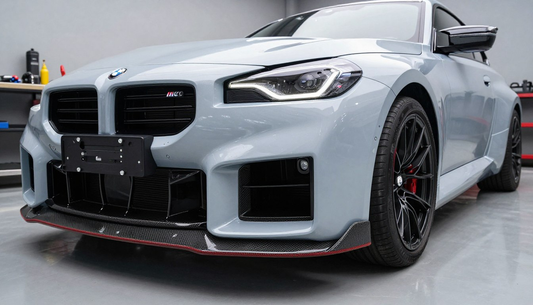
Getting rid of heat at the front is key. That's where BMW G87 M2 dry carbon intake ducts and BMW G87 M2 dry carbon front intake ducts help. They guide air through the nose for better airflow.
These pieces are made from pre-preg dry carbon fibre and fit perfectly. They're part of a cohesive BMW M2 carbon fibre theme. This includes the BMW G87 M2 CS style carbon grille and more.
How these upgrades work together
- The intake manifold upgrade tackles charge-temperature control where the heat stacks up fastest.
- The charge pipe hardware improves consistency under pressure, making the system more predictable when conditions get harsh.
- The front ducting supports faster heat rejection by feeding the cooling stack cleaner airflow.
What the Real-World Results Show: Datalogging IAT Reductions and Improved Thermal Stability on Track
On a hot-lap car, the story lives in the logs. If you’re chasing Sydney motorsport park Datalog results, focus less on one hero pull and more on how temps behave lap after lap. The goal is track-proven thermal stability that keeps the car sharp deep into a session.
Why lower IATs matter: maintaining ECU power targets and reducing the chance of limp mode
When intake air temperatures (IAT) climb, the ECU protects the engine. This often shows up as timing pull, softer torque, and power targets that drift down as heat builds. Good engine thermal load management is about slowing that climb and improving recovery between corners and straights.
In practice, Datalogging IAT reductions should look like steadier lines, not spikes. That sort of B58 peak intake air temperature reduction is what helps keep the ECU closer to its intended output under sustained load.
- Watch the trend: how fast intake air temperatures (IAT) rise from lap two onwards.
- Check repeatability: similar IATs at the same track points, session after session.
- Measure recovery: how quickly temps fall on a cooldown lap or short lift.
Track validation context: overheating issues observed at major events and how improved heat exchange extends usable
Track reality has been clear for years. Under demanding Australian circuit conditions, OEM cooling setups often force B58 drivers into a cool-down lap after just two or three hot laps due to excessive heat build-up, with teams doing cooldown laps and even spraying the front heat exchanger with cold water through the grille. That’s the problem B58 heat soak solutions track performance needs to address: heat exchange and recovery, not just peak power.
For your own B58 heat soak solutions track performance checks, add simple WOT comparisons to your log routine. Road-style third-to-fifth pulls have shown around a 10°F (5.5°C) IAT drop in testing, with the gap widening under load (for example, starting 1.5°C lower and finishing 4.5°C lower by the end of fifth gear in warmer air). Dyno overlays can also help frame changes, like a 7°C (12.6°F) max delta versus OEM in controlled conditions, but the real value is how it carries over to track-proven thermal stability.
Whether you’re reviewing Sydney motorsport park Datalog results or any other circuit day, keep the lens on engine thermal load management across a full session. That’s where Datalogging IAT reductions become meaningful, and where B58 peak intake air temperature reduction shows up as more consistent behaviour when it counts.
Build Checklist for Australian Track Days: Selecting the Right Racing Lab Setup for Supra A90 and BMW G-Series Platforms
First, think about how you drive. Short sprints might hide heat issues, but longer drives and repeated hot laps show the real problem. You'll see strong laps followed by rising intake temps and a soft power cut. This means you need to control temperature before looking for more boost, whether it's for a Toyota Supra A90 or BMW parts.
Next, focus on keeping charge temperatures stable. The B58 charge cooler is in the intake manifold and can get saturated quickly. Racing Lab offers a high-efficiency charge-cooling intake manifold upgrade. It has a 120mm bar-and-plate core, a CNC-machined housing, and a thermal insulating spacer. If you're aiming for more power, choose parts that are ready for external port injection now.
Then, make sure your parts can handle heat and pressure. Racing Lab's heavy-duty Aluminium charge pipes replace the weak OEM plastic boost pipes. They're perfect for both Toyota GR Supra A90 and BMW G-Series (B58) engines. If you're thinking about water or nitrous, choose 1/8-inch ports early to save time and keep your parts list organized.
Lastly, enhance airflow to help the cooling system recover between laps. Racing Lab's pre-preg dry carbon front intake ducts guide cleaner air to the front end. They're great for BMW G87 M2 owners in Australia too. For BMW G87 M2 parts, consider a carbon grille that supports your airflow goals. But always put function first. After making changes, log IATs and look for signs of better cooling and fewer limp events.
Essential Upgrades: Continue Perfecting Your BMW & Supra Track Setup
If you're serious about mastering thermal management and front-end aerodynamics, controlling intake air temperatures is only part of the winning formula. Explore how targeted cooling and structural upgrades can elevate your lap times and vehicle reliability even further:
-
How Dry Carbon Front Intake Ducts Upgrade the G87 M2's Front Stance & Airflow?
Discover how pre-preg dry carbon intake ducts do more than just refine the G87 M2's aggressive front fascia. Learn how optimized airflow routing supports your entire cooling stack while shaving weight off the nose. -
Why Do Factory B58 Charge Pipes Fail Under Boost—And Is Aluminum Worth It?
Don't let a brittle OEM plastic boost pipe end your track session early. Dive into the mechanical limits of factory charge piping under elevated boost, and see why upgrading to heavy-duty 3-inch aluminum charge pipes is a non-negotiable insurance policy for high-load reliability.
FAQ
What is B58 track heat soak, and why does it hit the Supra A90/A91 and BMW G-Series so quickly on circuit?
B58 track heat soak happens when the cooling system can't handle the heat under boost. Intake air temperatures rise with each lap. This makes the ECU pull timing, reducing power and sometimes triggering limp mode.
What does heat soak look like in logs during a track session?
Logs show IATs spiking after fast runs. As IATs climb, the ECU cuts power to protect the engine. If the heat keeps rising, the car might limp, losing speed and power.
Why does the ECU reduce power when IATs get high?
High IATs increase knock risk and stress the engine. The ECU pulls timing and cuts power to protect it. This keeps the engine safe but can slow you down.
How does the B58 charge cooling system work on the Supra A90 and BMW G-Series?
The B58 uses a liquid-to-air charge cooler on top of the engine. Coolant is cooled at the front, then goes through the charge cooler. This removes heat from the intake charge before it enters the engine.
Why is it hard to “just swap an intercooler” on the B58 compared with other platforms?
The B58's charge cooler is integrated into the intake manifold. This makes a true B58 intercooler upgrade a complex task, unlike simple bolt-in swaps on other platforms.
Why does track driving expose charge cooling thermal saturation more than street driving?
Track driving involves repeated high-load laps with little recovery. This constant boost generates heat faster than the system can reject it. Street driving often allows for natural cooldown, but spirited driving can also build heat.
What are the common track-day symptoms of B58 heat soak?
Many drivers notice a pattern of two or three hot laps followed by a cool-down. At the Global Time Attack Finals at Buttonwillow Raceway (November 2019), Supras struggled to run more than a few laps without limp mode. Teams did cooldown laps and even sprayed the front heat exchanger with cold water.
Why should Australian track-day drivers take a cooling-first approach before adding boost?
More boost means more heat. If the cooling system is already saturated, extra power can make IATs climb faster and trigger ECU intervention. A cooling-first approach helps achieve consistent lap times in Australian conditions.
What does “good” look like for IAT control on track?
Good IAT control means stable temperatures across repeated laps, not a sharp spike. It also means less timing pull, fewer power cuts, and a lower chance of limp mode. The goal is to maintain consistent power and avoid forced cool-down laps.
What is Racing Lab’s approach to B58 heat soak solutions track performance?
Racing Lab designs and tests precision parts for speed, handling, and style. For the Supra A90 and BMW G-Series, the focus is on thermal stability and airflow efficiency under maximum circuit load to reduce heat soak.
Which Racing Lab upgrade targets the core heat path on the B58?
The high-efficiency charge-cooling intake manifold upgrades target the main heat path. This is the heart of a BMW B58 intake manifold upgrade and a practical B58 intercooler intake manifold upgrade for Toyota GR Supra A90 and BMW G-Series platforms.
What are the key features of the Racing Lab intake manifold upgrade?
It features a 120mm bar-and-plate charge cooler core and a CNC-machined billet Aluminium housing. It includes an integrated thermal insulating spacer and is external port injection ready, suitable for higher-output builds.
Why upgrade charge pipes for track days, and what’s wrong with OEM plastic boost pipes?
Track heat and sustained boost cycles can expose weak points in OEM plastic boost pipes. Reliability is key for long sessions and high under-bonnet temperatures. A Toyota Supra A90 B58 charge pipe upgrade helps reduce risk and keeps performance consistent.
What are the specs of the Racing Lab charge pipe BMW G-Series (B58) & Toyota GR Supra A90 kit?
Racing Lab charge pipes use 3 inch Aluminium boost pipes for strength and flow. They also include 1/8 inch water nitrous injection ports, giving serious track users options for added charge-temp strategies.
How do dry carbon front intake ducts help reduce heat soak on a B58?
The B58 charge cooling loop depends on dumping heat at the front heat exchanger. Racing Lab’s dry carbon front intake ducts improve airflow feeding the cooling stack. Better airflow supports faster heat rejection, reducing system saturation and improving recovery between laps.
What makes Racing Lab dry carbon intake ducts different in construction and fit?
They use pre-preg dry carbon fibre construction for strength and low weight, with OEM-style fitment for clean integration. The aim is optimised front end airflow without a messy aftermarket look, supporting both track function and finish quality.
How do the intake manifold, charge pipes, and intake ducts work together as a complete B58 track heat soak solution?
The intake manifold upgrade increases charge cooling capacity at the source. The heavy-duty Aluminium charge pipes improve integrity under heat and pressure. The front intake ducts help the front heat exchanger do its job, supporting recovery. Together, they target thermal saturation and help avoid the “two or three laps then limp mode” cycle.
How do I choose the right Racing Lab setup for Australian track days?
Match parts to your use-case. If you do repeated hot laps and see IAT climb fast, prioritise the high-efficiency charge-cooling intake manifold first. Then add charge pipes for robustness, and front intake ducts to support cooling recovery. This sequence suits Australian track days where sessions can be back-to-back and ambient temps can be demanding.
What should I log on track to confirm the upgrades are working?
Focus on intake air temperatures (IAT), timing behaviour, and signs of ECU power reduction. Look for lower peak IATs, a slower rate of IAT rise, and quicker recovery on straights or cooldown laps. The practical goal is fewer power cuts and a reduced chance of limp mode.
Do these upgrades suit Toyota Supra A90 parts needs as well as BMW B58 platforms?
Yes. Racing Lab’s cooling and airflow upgrades are positioned for the Toyota GR Supra A90/A91 and BMW G-Series running the B58. For Australian buyers looking for Supra performance parts and BMW performance parts, the key is choosing components that directly address heat management before chasing more boost.
Are there Racing Lab parts for the BMW M2 G87, including carbon fibre options?
Yes. Racing Lab supports BMW G87 M2 parts including dry carbon intake ducts and a CS style carbon grille option. For many owners, these parts are chosen to align airflow goals with front-end styling, while keeping function first for track reliability.
Does a CS-style carbon fibre grille on the BMW M2 G87 help with track cooling?
It can support front-end airflow goals when designed around airflow pathways, not just looks. Racing Lab’s CS style pre-pregged dry carbon fibre grille for BMW M2 G87 2023+ is positioned to complement an optimised front end airflow approach, when paired with intake ducting that guides air to the cooling stack.
Are these upgrades only for high-power builds, or do they help lightly modified cars too?
They help both. Even lightly modified cars can suffer B58 track heat soak during spirited driving or track sessions. High-power builds simply hit the thermal ceiling sooner, making charge cooling and airflow upgrades essential for repeatable performance.
Where can I find Racing Lab parts in Australia for B58 and M2 G87 platforms?
Look for BMW & Supra carbon & performance parts Australia listings that cover Toyota Supra A90 parts, B58 charge pipe upgrade Australia, and BMW G87 M2 parts. Confirm fitment for your exact model (Supra A90/A91, BMW G-Series B58, or BMW M2 G87) and prioritise cooling hardware first for track use.
Previous
How Dry Carbon Front Intake Ducts Upgrade the G87 M2's Front Stance & Airflow?
Next
How to Upgrade Your BMW G87 M2 Front Grille While Keeping Factory ACC & Radar Functional?