

Why OEM Plastic Charge Pipes Fail Under Boost (And Why Billet Aluminum Won't)?
If you drive a turbo BMW or Supra, you might have heard about BMW B58 charge pipe failure. The factory pipe, while functional for stock requirements, is made of plastic. Over time, it can split, crack, or pop off. At Racing Lab, we engineered our billet solution specifically to overcome these structural limitations, ensuring that your boost remains consistent regardless of driving conditions. This usually happens when you press the gas pedal hard, because the boost pressure goes up quickly.
 The main reason for OEM plastic charge pipe failure is the combination of boost pressure, heat, and vibration over time. A single hard acceleration, a hot day in traffic, or a few more heat cycles can cause it to fail. This leads to a sudden leak, making a strong car feel weak.
The debate between Billet Aluminum and Plastic Charge Pipes is important for real-world reliability. A billet upgrade can handle high pressure, keep its shape, and seal well at the joins. Simply put, billet aluminum durability ensures your setup performs consistently as boost increases.
Australian drivers looking for reliable power will find what they need at Racing Lab. The Racing Lab charge pipe is made for enthusiasts who want to be confident on the road and at the track. It's designed with the same focus as BMW performance parts Australia buyers: fitment, strength, and consistent results.
Understanding OEM Plastic Charge Pipe Failure Under Boost Pressure Limitations
In turbo setups, the weak link is often the factory pipework. It must hold pressure, seal cleanly, and stay stable in real traffic. This is why OEM plastic charge pipe failure is a big issue for BMW G-Series (B58) & Toyota GR Supra A90 owners in Australia.

What a charge pipe does in turbocharged BMW G-Series (B58) & Toyota GR Supra A90 setups
A charge pipe carries pressurised air through the intake path. It links the intercooler plumbing to the throttle body area. Under load, it needs to keep shape, maintain clamp tension, and keep sensors sealed.
When boost rises near the factory boost pressure limitations, sealing becomes more demanding. Any small movement at a joint can turn into a leak. This is a common lead-in to BMW B58 charge pipe failure on a hard pull.
How boost pressure, heat cycles and vibration compound stress in factory plastic
Plastic works well for cost and noise control, but it does not love harsh conditions. Add engine movement, road vibration, and repeated heat cycles, and the material can start to change over time.
This is where thermal fatigue shows up. The pipe expands and contracts, O-rings take a set, and mould lines or sharp transitions can become stress points. When boost pressure limitations are pushed with tuning, that extra load can magnify tiny flaws that were already there.
- Heat-soak in traffic raises under-bonnet temps, then cools fast once you move again.
- Weekend spirited driving adds repeated pressure spikes and quick throttle changes.
- Normal daily use slowly weakens the plastic around joins and bungs.
Why “it was fine yesterday” is common with sudden split or pop-off failures
Most drivers do not get much warning. The pipe can be degrading for months, then suddenly fails during an ordinary overtake. That is why BMW B58 charge pipe failure often feels random, even when the car was “fine yesterday”.
A split, a blown-out coupler, or a pop-off can happen when the clamp bites into softened plastic, or when a seam opens under pressure. For many owners browsing Supra performance parts Australia, the goal is simple: keep the intake tract stable so boost control stays predictable, even when conditions are hot and the driving is mixed.
BMW B58 Charge Pipe Failure,Billet Aluminum Vs Plastic Charge Pipe
BMW B58 charge pipe failure often starts with a small leak that's easy to miss. It might feel normal when you're not pushing hard on the throttle. But when you do, it can act up.

Common failure points on stock plastic pipes: coupling lips, mould seams and sensor bungs
The coupling lips on the factory pipe can deform when clamps are tightened. A boost spike can cause them to split or the connection to pop off under load.
Mould seams are also weak. Over time, heat cycles and engine movement can turn these seams into cracks. This is more likely when the pipe flexes between the intercooler and throttle body.
Sensor bungs and ports also face stress. The change in shape and thickness around a bung can create a hot spot for cracking. This is why many owners consider a billet aluminum charge pipe over the plastic one for reliability.
What changes when you raise boost with tuning and supporting mods
When you tune the car, boost rises faster and hits harder. This means higher pressure in the intake tract and sharper transients at gear changes. This is tough on ageing plastic.
This is why a BMW B58 charge pipe upgrade in Australia is often seen as a preventative step. Racing Lab automotive performance parts aim to replace the weak link before it becomes a problem on the side of the road.
Symptoms drivers notice in Australia: limp mode, whooshing under load, inconsistent power delivery
When the pipe starts to leak, drivers often hear a whooshing sound under load. Power delivery can feel patchy, with boost that comes and goes.
Some cars will drop into limp mode, which happens when the ECU sees boost not matching the target. At this point, the choice between Billet Aluminum and Plastic Charge Pipe is no longer just theory. It's about confidence when merging, overtaking, or climbing long hills.
Thermal Fatigue and Heat-Soak: Why Plastic Degrades Faster in Real-World Aussie Driving
In Australia, hot days and slow traffic can be tough on a turbo intake. Heat-soak builds up quickly and stays after you park. Over time, thermal fatigue shows up in weak spots.
Thermal expansion mismatch between plastic, O-rings and metal intercooler connections
Plastic charge pipes, rubber O-rings, and metal connections expand differently. This mismatch can pinch seals when hot, then relax them when cool. The joint keeps moving, even when the clamp stays tight.
As this happens over time, the system becomes less forgiving near boost pressure limits. Small changes in alignment can lead to leaks, then OEM plastic charge pipe failure under load.
Repeated heat cycles from traffic, spirited runs and track days accelerating brittleness
Stop-start traffic in summer, hard pulls on back roads, and then more heat soak at lights is common. Each cycle adds stress to mould seams, sensor bungs, and pipe ends. Plastic can harden and get brittle sooner in these conditions.
- Long idling queues and short trips that never fully cool down
- Hill runs where intake temps rise and stay elevated
- Track sessions with repeated wide-open throttle and fast cooldown swings
Oil Vapour and contamination inside the intake path weakening long-term integrity
Oil Vapour from the PCV system can coat the inside of the charge path. Mixed with heat, this film can soften some plastics and make seals feel swollen or slick. It can also trap grit, which doesn’t help the sealing surface over time.
This is why many owners look beyond cosmetic carbon fiber upgrades and focus on parts that reduce risk. Racing Lab’s approach fits how cars are actually driven here. It’s the sort of thinking people expect when shopping BMW performance parts Australia.
Billet Aluminum Durability: Engineering Superiority of the Racing Lab Charge Pipe
When boost rises, the charge path needs to stay tight and stable. The Racing Lab charge pipe is built for that job. It's made of billet aluminum, designed for real Australian driving.
Billet construction strengths: wall thickness consistency, stronger bead rolls and secure coupler retention
Billet Aluminium starts as a solid piece. This makes the structure consistent throughout. It keeps wall thickness even, which is important when the pipe sees repeated pressure spikes.
Strong bead rolls are key under boost. They give the clamp a proper edge to bite behind. This helps stop couplers from walking off when torque hits.
How billet Aluminium resists cracking, ballooning and boost leaks compared to plastic
Plastic charge pipes can fatigue over time, then crack near stress points. They can also soften and deform with heat. Once the shape changes, sealing becomes harder, and small boost leaks can show up.
Billet aluminum durability shines because Aluminium holds its form under load. It resists ballooning and is far less likely to split. This helps maintain a stable seal when the engine bay gets heat-soaked.
Fitment focus for BMW G-serie (B58) / Toyota GR Supra A90: sensor provisions, clamps and sealing surfaces
Strength only helps if fitment is right. For BMW G-serie (B58) / Toyota GR Supra A90 setups, the Racing Lab charge pipe is designed with clean sensor placement. It also has tidy alignment and sealing surfaces that sit flat and square.
- Sensor provisions that match the factory layout, so wiring and readings stay consistent.
- Clamp-friendly ends that support even pressure around the coupler.
- Sealing surfaces that reduce the chance of a slow leak after heat cycles.
If you’re sorting intake reliability before tuning or while stacking Racing Lab performance upgrades, this is the kind of hardware that fits the brief. It also earns its place among the best performance parts for Toyota Supra A90 when you want the boost system to stay sealed without fuss.
Billet Aluminum Charge Pipe Vs Plastic Stock BMW: Performance Gains You Can Actually Feel
When comparing billet aluminum charge pipes to plastic stock BMWs, the real gain is how the car performs. It's not about a sudden power boost. Instead, a tight intake path helps the turbo work better, making the car feel smoother and more stable.
Sharper throttle response from reducing leak risk and maintaining requested boost
Factory plumbing can sometimes make the throttle feel vague, mainly in the mid-range. A solid pipe keeps pressure steady, making the car respond more sharply. This is true for both B58 and A90 engines.
This also means less chance of the BMW B58 charge pipe failing. Such failures can cause a sudden drop in power when you need it most.
More consistent power delivery for tuned setups and spirited street driving
Tuned cars need more boost, and that's where consistency is key. Racing Lab's parts focus on reliable sealing and stable couplers. This keeps boost control steady, pull after pull.
Looking for a BMW B58 charge pipe upgrade in Australia? Think of it as making the car's power delivery smoother. It feels more even through gear changes, with fewer surprises.
Long-term reliability benefits for daily-driven cars and weekend track builds
For daily driving, reliability is the big win. Less heat fatigue, fewer splits, and fewer surprises. This peace of mind also applies to weekend track use, where repeated heat-soak can be harsh.
This mindset also drives demand for Supra performance parts in Australia. It's about building a stronger intake path. This lets the rest of the setup work without interruptions.
BMW B58 Charge Pipe Upgrade Australia: When to Upgrade and What to Check First
If you drive a B58-powered BMW or Supra in Australia, a BMW B58 charge pipe upgrade can be a lifesaver. The factory pipe might last a while but can fail suddenly. Many owners upgrade to BMW performance parts Australia early to avoid this.
It's important to have realistic expectations. Even with better parts, boost pressure is limited by the whole system. A good upgrade plan focuses on fixing common weak spots that lead to BMW B58 charge pipe failure.
Ideal upgrade timing
- Upgrade before tuning to avoid extra stress on weak spots.
- Upgrade before track days to prevent damage from heat and long drives.
- Upgrade after noticing early signs like a faint hiss or inconsistent boost.
Pre-install checks
- Check intercooler connections for damage or misalignment.
- Look for signs of wear or small cracks in couplers.
- Check for oil residue on the join areas, which can cause leaks.
- Ensure clamp alignment for a tight seal.
Post-install verification
- Do a basic pressure test to ensure no leaks.
- Check for stable boost and smooth throttle response after installation.
- If there are issues, check the joints first before looking at sensors or software.
Many local builds choose Racing Lab performance upgrades for reliable performance. It's a good choice for those looking to avoid BMW B58 charge pipe failure under heavy load.
Building a Reliable Intake Path for BMW B58 & Supra A90 with Racing Lab
A strong intake path depends on its weakest part. That's why Racing Lab upgrades work best together, not alone. For driving in Australia, we aim for steady boost, stable temperatures, and fewer surprises.
Pairing a Racing Lab performance upgrades approach: charge pipe + supporting airflow mods
Begin with sealing and flow. A good charge pipe keeps pressure right, but it needs the right couplers and clean sensors too. This ensures steady performance.
Next, add supporting airflow mods for a complete system. Many see Racing Lab parts as a checklist for reliability and power.
- Air path integrity: clamps, couplers, and joiners that don’t creep under heat and vibration
- Boost consistency: fewer leaks means smoother pull and better repeatability
- Heat management: components that cope with stop-start traffic and hot summer runs
Where a Toyota Supra A90 intake manifold upgrade fits into the overall plan
A Toyota Supra A90 intake manifold upgrade is for stable airflow and fewer bottlenecks. It's about consistent performance, not just peak numbers.
Upgrading the intake side? A Racing Lab intake manifold can be planned with other parts. This approach suits those aiming for top performance without constant rework.
How Racing Lab automotive performance parts are designed to replace weak factory components with track-ready hardware
Factory parts are okay at stock power but can fail under heat and boost. Racing Lab focuses on precision, durability, and hardware for real-world use.
In Australia, this matters for daily drives, weekend runs, and track sessions. A system mindset in choosing parts ensures each upgrade supports the next, avoiding weak points.
Australia BMW & Supra Carbon & Performance Parts: Styling and Function with Dry Carbon Fibre Exterior Upgrades
After sorting the inside, the car's outside should match its performance. Australia BMW & Supra carbon & performance parts do more than look good. They also make the car lighter and give it a sharp, race-ready feel.
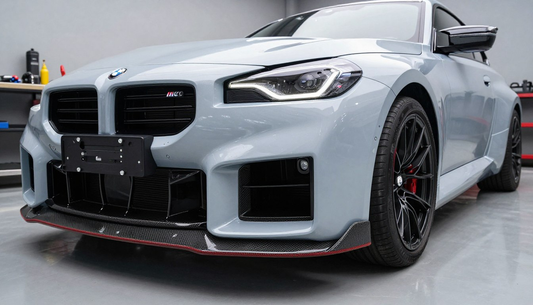
For those in Australia wanting a factory-like fit, BMW G87 M2 performance parts are key. BMW G87 M2 parts like dry carbon front intake ducts add a motorsport look. They help improve airflow, making the car cooler and more balanced.
Changing the front of the car can make a big difference. The cs style pre pregged dry carbon fiber grille for BMW G87 M2 2023+ looks aggressive yet stays true to BMW. These upgrades should be chosen with care to ensure a seamless look.
Racing Lab offers a range of reliable performance parts and premium exterior options. This makes it easy to keep the car looking and feeling cohesive. The aim is to create a car that looks fast, feels solid, and performs well on Australian roads.
Further Reading: Optimizing Your B58 & Supra Performance
If you found this guide helpful in understanding the importance of a stable intake path, our technical library offers deeper insights into the specific stressors affecting your BMW or Supra. Explore these related articles to continue building a more reliable and responsive machine:
-
Why Do Factory B58 Charge Pipes Fail Under Boost—And Is Aluminum Worth It?
While we’ve touched on the structural fatigue of OEM plastic in this article, this deep dive breaks down the engineering behind boost-pressure limitations in greater detail. If you are debating the long-term ROI of a billet upgrade versus factory replacement, this piece provides the technical clarity you need to make an informed decision for your daily driver or track build. -
Why is your BMW losing power on hot days, and how to fix it?
Consistency is the hallmark of a well-tuned vehicle. If you’ve noticed your car feeling "sluggish" after a spirited run or during peak summer traffic in Australia, this guide explains the mechanics of heat-soak and how optimized airflow components—such as our performance intake manifolds and cooling-focused hardware—can help you maintain peak power delivery when temperatures rise.
FAQ
Why do OEM plastic charge pipes fail under boost on the BMW B58 and Toyota GR Supra A90?
Factory pipes are made of plastic. Plastic can split, crack, or pop off under high boost pressure. This is due to vibration and repeated heat cycles.
What does the charge pipe actually do in a turbocharged BMW G-Series (B58) or Toyota GR Supra A90?
Why does boost, heat cycling, and vibration hit plastic so hard?
Why do charge pipe failures feel random—“it was fine yesterday”?
Where do stock plastic pipes usually fail on the BMW B58?
What changes when you raise boost with tuning and supporting mods?
What symptoms do Australian drivers notice when a charge pipe is leaking or has failed?
How does thermal expansion mismatch affect sealing over time?
Why can Aussie driving conditions make charge pipe ageing worse?
Does Oil Vapour in the intake tract contribute to charge pipe problems?
Billet Aluminium charge pipe vs plastic stock BMW—what’s the real difference?
What makes billet Aluminium more durable than plastic for a B58 charge pipe?
How does Racing Lab approach charge pipe engineering for BMW and Supra platforms?
Why does fitment matter as much as strength on a charge pipe upgrade?
Can you actually feel a charge pipe upgrade on the road?
Is the headline benefit performance or reliability?
When should Australians plan a BMW B58 charge pipe upgrade?
What should you check before fitting an upgraded charge pipe?
What should you do after installation to confirm it’s sealing properly?
How does a “system” approach improve reliability on B58 and Supra A90 builds?
Where does a Toyota Supra A90 intake manifold upgrade fit in?
What are some of the best performance parts for Toyota Supra A90 owners building for dependable power?
What dry carbon fibre exterior upgrades suit the BMW G87 M2 in Australia?
Can Racing Lab be a single source for Australia BMW & Supra carbon & performance parts?
Previous
Why Do Factory B58 Charge Pipes Fail Under Boost—And Is Aluminum Worth It?
Next
How Dry Carbon Front Intake Ducts Upgrade the G87 M2's Front Stance & Airflow?